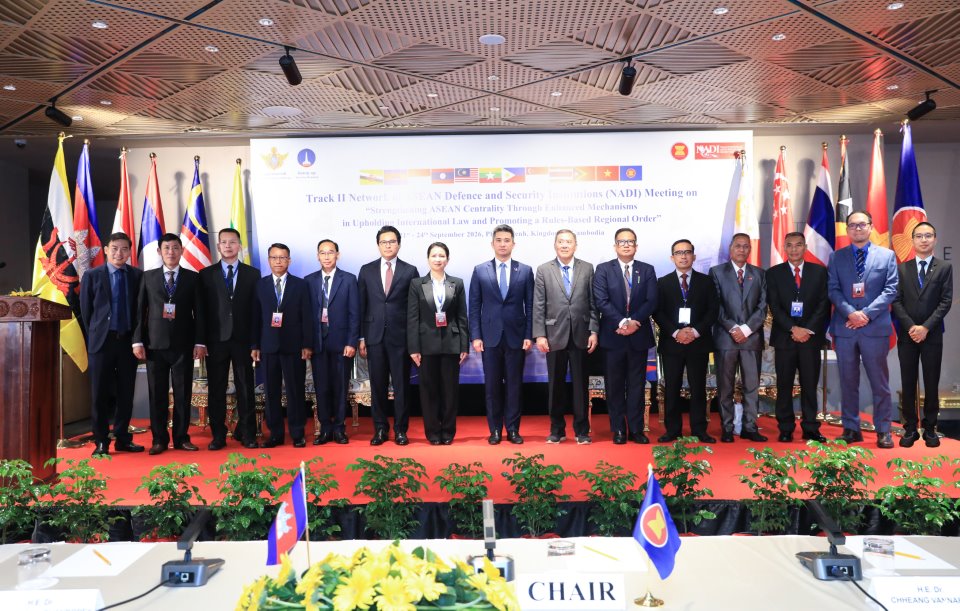
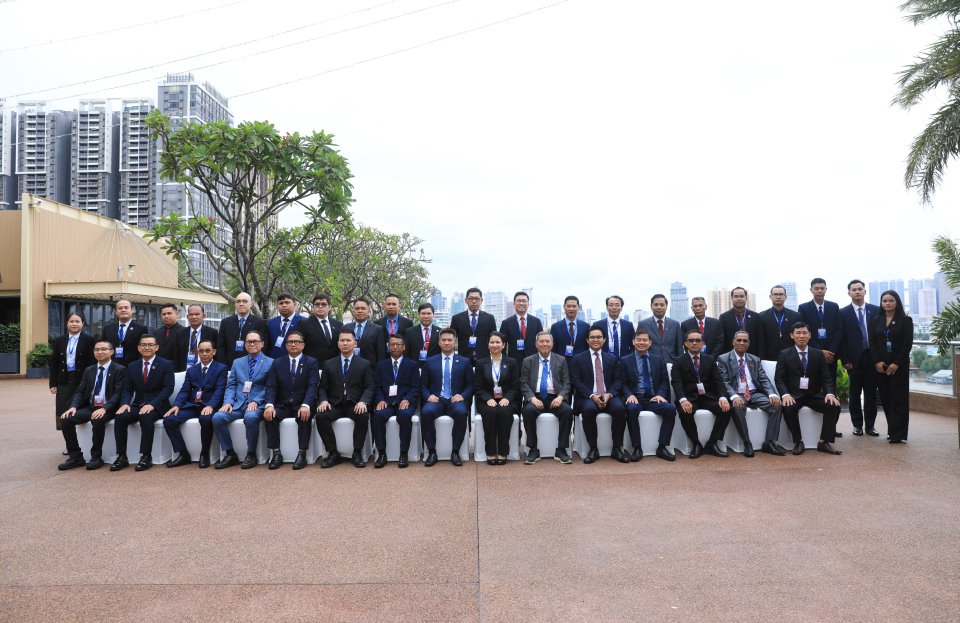
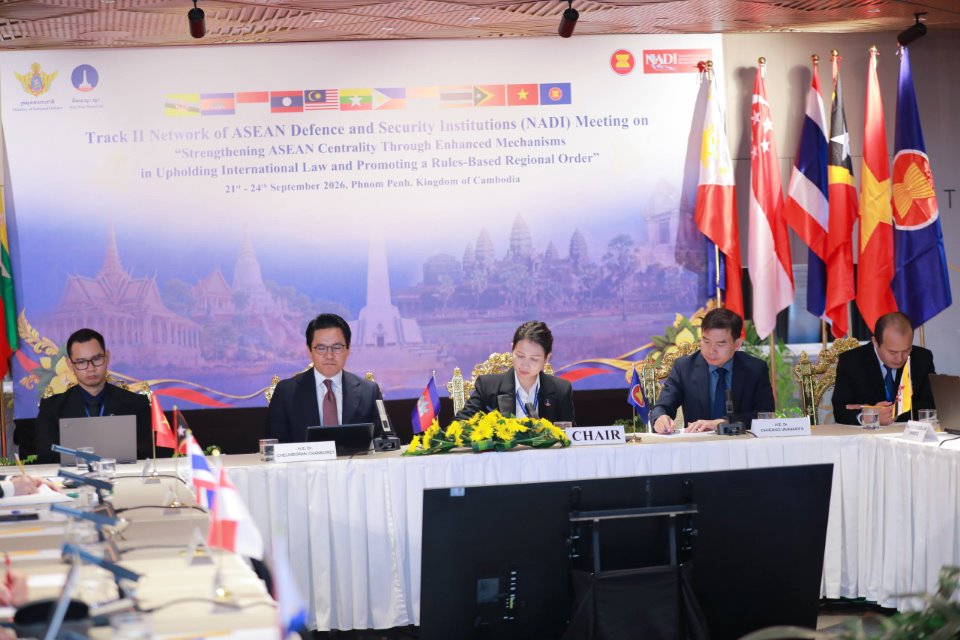
Phnom Penh, 23 September 2026 — H.E. Dr. Chheang Vannarith, Deputy Secretary-General of the National Assembly and Chairman of the National Assembly Advisory Council, on Tuesday participated as a guest speaker at the Track II Network of ASEAN Defence and Security Institutions (NADI) Meeting at SUN & MOON, Riverside Hotel in Phnom Penh.
The meeting brought together representatives, experts and researchers from ASEAN defence and security institutions to discuss geopolitical competition, emerging security challenges and rapid technological transformation.
The meeting aimed to promote dialogue, cooperation and mutual understanding, as well as to develop practical recommendations to strengthen ASEAN’s collective capacity and mechanisms for maintaining peace, stability and a rules-based regional order.
During the opening session, participants highlighted ASEAN unity and centrality, international law, dialogue and cooperation as foundations for peace and stability. Cambodia’s experience also demonstrated the value of trust, reconciliation, inclusivity and legal principles in promoting peace.
Speaking at the first session, Dr. Chheang Vannarith delivered a keynote address on ASEAN centrality, international law and a rules-based regional order. He said the changing strategic landscape required Track II diplomacy to become more innovative, adaptive and agile.
Amid increasing geopolitical risks, he stressed the need to strengthen strategic foresight and the capacity to learn and adapt rapidly. These capabilities are essential for anticipating emerging challenges and navigating the changing geopolitical environment.
Dr. Chheang Vannarith also highlighted the growing importance of mediation diplomacy and stronger mediation capacity. He noted that Track II engagement could help maintain communication, build trust and support the de-escalation of conflicts, including tensions between Cambodia and Thailand.
He referred to the involvement of China and Japan in supporting Track II dialogue related to Cambodia and Thailand. He encouraged ASEAN member states to further develop their own Track II networks and mediation capacities.
“The Cambodia–Thailand border situation represents an important test of ASEAN centrality, unity and preventive diplomacy,” Dr. Chheang Vannarith said. “ASEAN principles must be translated into concrete action through sustained engagement, confidence-building and mediation.”
He also underlined the importance of effective ceasefire monitoring and the peaceful settlement of disputes. Such efforts, he said, would contribute to maintaining regional peace and stability.
Regarding technological development, Dr. Chheang called for the responsible and critical use of artificial intelligence. “AI-generated concepts and terminology must be carefully examined in their historical context and assessed for their meaning and relevance, while human judgment must remain central,” he said.
The discussions reaffirmed NADI’s important role in connecting research, policy thinking and practical defence cooperation. The network contributes to strategic foresight, mediation capacity and regional efforts to uphold international law and a rules-based regional order.